Learn About Puerto Rico
Government of Puerto Rico
Puerto Rico is an unincorporated territory of the United States, officially known as the Commonwealth of Puerto Rico, or in Spanish, Estado Libre Asociado de Puerto Rico (Free Associated State of Puerto Rico).
The government of Puerto Rico is a self-governing commonwealth in association with
the United States and operates under a formal republican system, established by the Constitution of 1952. Three distinct branches: executive, legislative, and judicial create a system of checks and balances within the unique framework of U.S. territorial governance.
The island has its own constitution and governs itself internally, though it remains subject to U.S. federal laws. Puerto Rico's government is structured similarly to U.S. state governments, with three branches: executive, legislative, and judicial.
Puerto Ricans are U.S. citizens but cannot vote in U.S. presidential elections unless they reside in one of the 50 states or the District of Columbia. However, they can vote in presidential primaries and have a Resident Commissioner in the U.S. House of Representatives who can vote in committees but not on the House floor.
Digraph: PR/QR
Type: Commonwealth associated with the US. The island's
inhabitants possess all the rights and obligations of United States
citizens such as paying Social Security, receiving federal welfare and serving
in the armed forces, except for the right to vote in presidential
elections and the obligation to pay federal taxes.
The term "United States" when used in a geographical sense on official
documents, acts and/or laws; includes the Commonwealth of Puerto Rico, the
Virgin Islands, Guam, and American Samoa.
Government Form: Republican; executive, legislative, and judicial
branches.
Political Status
U.S. Commonwealth territory since 1952
Citizenship
All residents are U.S. citizens since 1917
Constitution
Own constitution approved in 1952
Legal System
Subject to U.S. federal laws
Puerto Rico's Political Status & Federal Relationship
Puerto Rico has authority over its internal affairs. United States
controls: interstate trade, foreign relations and commerce, customs
administration, control of air, land and sea, immigration and emigration,
nationality and citizenship, currency, maritime laws, military service,
military bases, army, navy and air force, declaration of war,
constitutionality of laws, jurisdictions and legal procedures, treaties,
radio and television--communications, agriculture, mining and minerals,
highways, postal system; Social Security, and other areas generally
controlled by the federal government in the United States. Puerto Rican
institutions control internal affairs unless U.S. law is involved, as in
matters of public health and pollution.
The major differences between Puerto Rico and the 50 states are
exemption from some aspects of the Internal Revenue Code, its lack of voting representation in either
house of the U.S. Congress (Senate and House of Representatives), the ineligibility of Puerto Ricans
residing on the island to vote in presidential elections, and its lack of assignation of some revenues
reserved for the states.
As noted, because Puerto Rico is a territory and not a State,
Puerto Rico has no representation in the Electoral College, nor have
voting representation in Congress like the States. Puerto Ricans cannot
vote in general presidential elections unless they establish residency in one of the 50 states.
Since 1902, Congress has authorized Puerto Rico to be represented in Washington, DC,
by one Resident Commissioner.
The Resident Commissioner of Puerto Rico is a non-voting member of the United States House of
Representatives and elected by the voters of the U.S. Commonwealth of Puerto Rico every four years.
The federal government, located in San Juan, is represented by 2
district judges and the procurator, who is named by the President of the
United States. The Federal Court has final authority of the ELA.
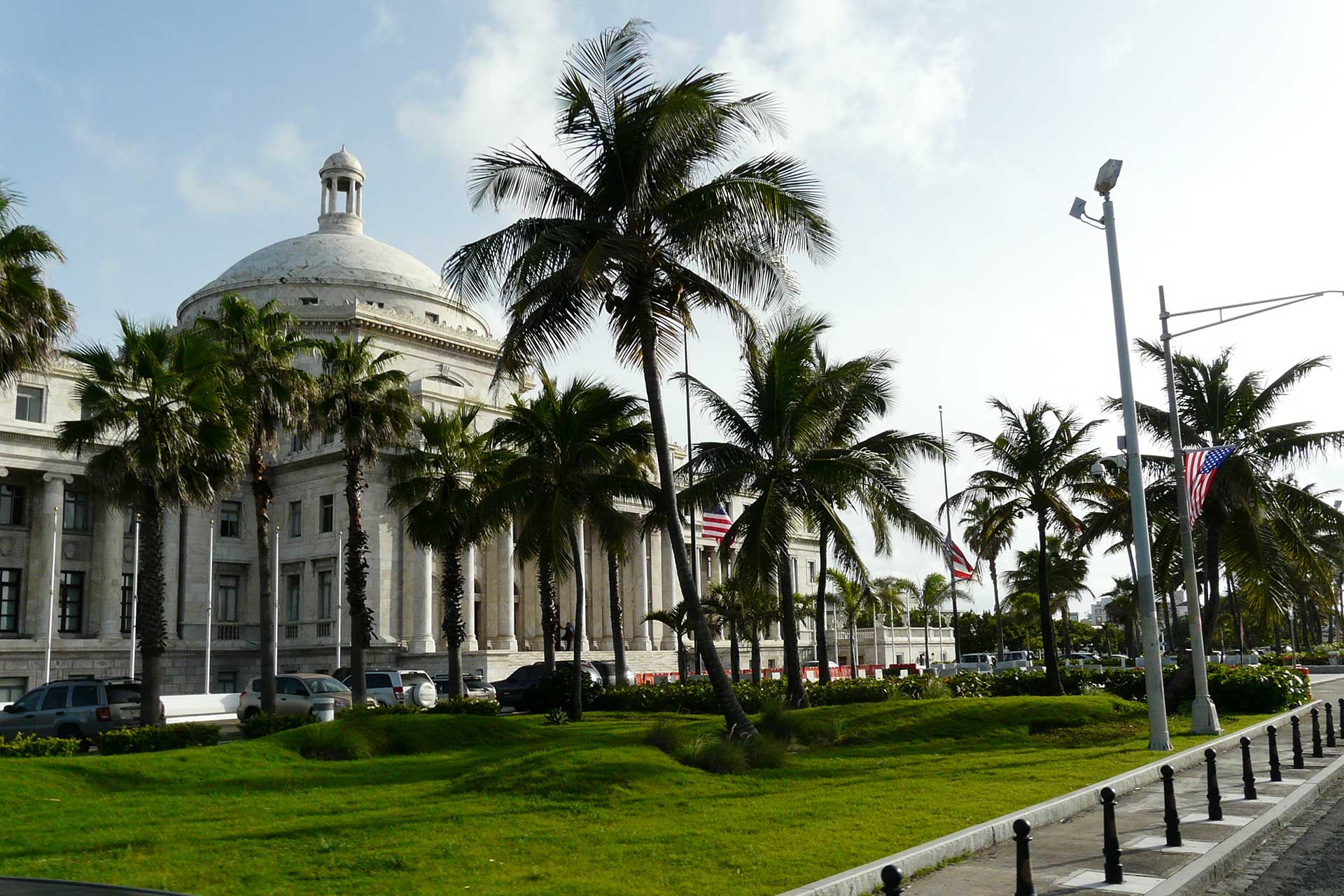
Capitol Building
Capital
San Juan is the capital of Puerto Rico and the most
populous municipality in Puerto Rico, with a population of two
million. The city was founded in 1508, by Juan Ponce de León.
It is also Puerto Rico's main port of entry and has one of the best harbors in the
Caribbean. San Juan is located on the north east of the island.
Local Government
Puerto Rico is divided into 8 senatorial districts, 40 representative
districts, 78 municipalities. Each municipality with its own local goverment.
In Puerto Rico there there are no first-order administrative divisions as defined by
the U.S. Government (Commonwealth associated with the U.S.); ,
but Puerto Rico is divided into 78 municipalities (municipios).
Each municipality manages local services such as police and fire protection, public works, and urban planning.
Municipalities are governed by an elected mayor serving a four-year term and a municipal assembly.
The mayor appoints administrative officials, including a secretary-auditor and treasurer.
Municipalities are divided into barrios, which are further subdivided into sectors.
A municipality (municipio) is an administrative local area
generally composed of a clearly defined territory and commonly referring to a
city, town, or village government. In Puerto Rico, a municipality is a city
and the government unit that is the primary legal subdivision; each
municipality has an elected mayor. However, the Census Bureau treats the
municipio as the statistical equivalent of a county.
Structure:
- Mayor (Alcalde): Chief executive, elected to 4-year term
- Municipal Legislature: 12-16 members depending on population
- Responsibilities: Local services, zoning, permits, and community development
Government Officials
Puerto Rico's government is led by elected officials at both the local and federal levels. From the Governor and Legislative Assembly to Puerto Rico's representation in Washington, these leaders shape the island's policies and future.
View Current Government Officials
Major Cities
San Juan,
Ponce,
Caguas,
Mayagüez,
Bayamón,
Carolina,
Arecibo,
Guaynabo,
Cayey,
Aguadilla,
and
Fajardo.
Other territories include: Mona (5,517 hectares), Monito
(15 hectares), Desecheo (122 hectares), and
Caja de Muertos (202 hectares). Numerous other small cays lie offshore of Puerto Rico.
Mona and Monito are located between Puerto Rico and the
Dominican Republic. These small islands are considered the Galápagos
Islands of the Caribbean Sea. No other reef and offshore island
habitat within U.S. jurisdiction possesses such ecological uniqueness,
invaluable habitat, and biological diversity within such a reduced
surface area. For these reasons, Mona and Monito Islands have been
recognized by the Commonwealth of Puerto Rico as a Natural Reserve.
The islands are a critical habitat of endangered marine turtles,
sea birds and occasional migratory marine mammals.
Metropolitan Area
San Juan,
Bayamón,
Carolina,
Guaynabo,
Trujillo Alto
and Caguas.
Interesting Fact
On June 4, 1951, Puerto Rican voters approved in a referendum a U.S.
law that granted them the right to draft their own constitution. The
constituent assembly began its deliberations in the following September.
In March 1952 the electorate approved the new constitution, and on July
25 Governor Muñoz proclaimed the Commonwealth of Puerto Rico.
Major Political Parties
Puerto Rico has a multi-party system primarily organized around views on the island's political status.
New Progressive Party
Partido Nuevo Progresista (PNP)
Founded in 1967, it advocates for Puerto Rico to become the 51st state of the United States. Supports full integration with the U.S. federal system, followers are
known as "los penepes", identified by color blue.
Key Positions
- Puerto Rican statehood
- Full representation in U.S. Congress
- Presidential voting rights
- Economic integration with U.S.
Popular Democratic Party
Partido Popular Democrático (PPD)
Founded in 1938, it supports maintaining and enhancing the current commonwealth status, followers are known as "los populares", identified by color red. The oldest of the major political parties.
Key Positions
- Enhanced commonwealth status
- Maintain cultural identity
- Economic autonomy
- Preserve Spanish language
Puerto Rican Independence Party
Partido Independentista Puertorriqueño (PIP)
Founded in 1946, it advocates for Puerto Rico to become a sovereign, independent nation separate from the United States, follorwers are known as
"los pipiolos", identified by color green.
Key Positions
- Full independence from U.S.
- Sovereign nation status
- Own international relations
- Cultural preservation
Other political groups are: Armed Forces for National
Liberation (FALN); Volunteers of the Puerto Rican Revolution; Boricua
Popular Army (also known as the Macheteros); and, Armed Forces of Popular
Resistance.
Is Puerto Rico a Country, State, or U.S. Territory?
Elections and Voting
General elections are held every four years on the first Tuesday after the first Monday in November, coinciding with U.S. general elections.
Voting Rights
- Puerto Rico residents vote for local government
- Can vote in presidential primaries
- Cannot vote in presidential general elections
- Can vote in federal elections if residing in a U.S. state
Voters elect the Governor, Resident Commissioner (4-year term), all members of the Legislative Assembly, and municipal officials.
Who Can Vote
- U.S. citizens 18 years or older; universal; Puerto Ricans are
U.S. citizens, but island residents do not vote in U.S. presidential elections.
- Registered voters in Puerto Rico
- No residency requirement length
2024 Election
Ruling Party: New Progressive Party (NPP)
Voter Turnout: approximately 64.46 % of registered voters
Registered Voters: Approximately 2.4 million registered voters. Out of a total population of about 3.2 million residents
Political Activity: High civic engagement in local politics. Puerto Rico has traditionally higher voter turnout than many U.S. states.
Next Election: Tuesday, November 7, 2028
Constitution: ratified 3 March
1952; approved by U.S. Congress 3 July 1952; effective 25 July 1952.
Electoral Commission: Comisión Estatal de
Elecciones, 787-724-4979.
How to Register to Vote:
Register in person at your local election office. Visit the
State Election Commission for more information.
Fiscal Year: 1 July - 30 June
Interesting Fact
During election year, automobile caravans are among the activities
planned for political mobilization and propaganda. People
gather in town squares to show their support for candidates
and parade through the cities to encourage others to vote.
Legal System, International Status & Defense
Legal System:
Puerto Rican civil and commercial codes are fashioned after Spanish
models; penal, procedural, and public (including constitutional) law are
fashioned after U.S. models.
Member of:
CARICOM (observer), ECLAC (associate), FAO
(associate), ICFTU, INTERPOL (sub-bureau), IOC, WCL, WFTU, WHO
(associate), WTO (associate).
U.S. Diplomatic Representation: none (commonwealth associated
with the US).
International disputes: None.
Defense Forces:
The defense of Puerto Rico has been the responsibility of the United States since 1898, as part of the
Treaty of Paris.
Military branches:
no regular indigenous military forces; paramilitary National Guard, Police Force
Manpower reaching militarily significant age annually:
- male: 30,517
- female: 29,010 (2010 est.)
Military Facilities/Bases: There is currently only one active military installation
in Puerto Rico (and the Caribbean). Fort Buchanan is a U.S. Army Base located in Guaynabo, about 12 miles
south of downtown San Juan, in northern Puerto Rico. The base was established in 1923 in honor
of Coronel James A. Buchanan who was the commander of the 1st Puerto Rico U.S. Army unit, commonly known
as the Porto Rico Regiment. After defending the Panama Canal Zone in WW I, the regimen was officially
designated the 65th Infantry Regument.
Throughout the 20th century Puerto Rico had as many as 25 military installations. Most
installations have been deactivated and partially turned over to the local government. The largest
installations were:
Roosevelt Roads Naval Station in Ceiba (closed on March 21, 2004),
the Borinquen Coast Guard Air Station in Aguadilla,
the Puerto Rico Air National Guard at Mu�iz Air Force base in San Juan,
the Atlantic Fleet Weapons Training Facility (AFWTF) in Vieques
the U.S. Air Force Ramey Air Force Base, and
the National Guard training facility at Camp Santiago in Salinas.
Old San Juan
Puerto Rico's Commonwhelth Status Explained
Puerto Rico is an unincorporated territory of the United States operating under a Commonwealth system (Estado Libre Asociado), established in 1952. While subject to U.S. sovereignty and federal law, Puerto Rico is not a state and is not fully incorporated into the United States.
Under this arrangement, Puerto Rico governs its internal affairs through its own constitution and elected government, while the United States retains authority over matters such as defense, foreign relations, immigration, currency, and interstate commerce.
Key Features of Commonwealth Status
- Puerto Ricans have been U.S. citizens since 1917
- Puerto Rico has its own constitution and elected government
- Residents cannot vote in U.S. presidential elections unless they reside in one of the 50 states
- Puerto Rico elects a Resident Commissioner to the U.S. House of Representatives (non-voting member)
- Subject to most federal laws
- Residents generally do not pay federal income tax on Puerto Rico-sourced income
U.S. Territories and Commonwealths
The United States currently has several unincorporated territories and two commonwealths.
Commonwealths:
- Puerto Rico
- Northern Mariana Islands
Major inhabited territories:
- Guam
- U.S. Virgin Islands
- American Samoa*
(*Residents of American Samoa are U.S. nationals, not U.S. citizens.)
Several additional U.S. territories are uninhabited, including Baker Island, Howland Island, Johnston Atoll, Wake Island, and others.
Political Status Debate
Puerto Rico's political relationship with the United States has been the subject of ongoing debate locally and federally. The central question revolves around whether Puerto Rico should:
- Remain a U.S. territory
- Become the 51st U.S. state
- Become an independent nation
Multiple referendums have been held over the decades, along with legislative proposals in Congress. Under the U.S. Constitution's Territorial Clause, ultimate authority over Puerto Rico's political status rests with the U.S. Congress.
Referendums/Plebiscite Results (7):
- July 23, 1967: 60.4% for commomwealth
- November 14, 1993: 48.6% for commomwealth
- December 13, 1998: 46.5% for statehood
- November 6, 2012: 61.2% for statehood (with conditions)
- June 11, 2017: 97% for statehood (low turnout)
- November 3, 2020: 52.5% for statehood
- November 5, 2024: 58.61% for statehood
Congressional Action
Any change to Puerto Rico's status requires approval from the U.S. Congress, making this a complex issue involving both local and federal politics.
Read more about Political Status Debate
Unique International Presence
Although Puerto Rico is a U.S. territory, it maintains a distinct cultural and international identity. The island competes separately in events such as the Olympic Games and international pageants, reflecting its unique historical and political position.
Official Emblems of the Commonwealth
Puerto Rico's rich identity expressed through its official symbols.
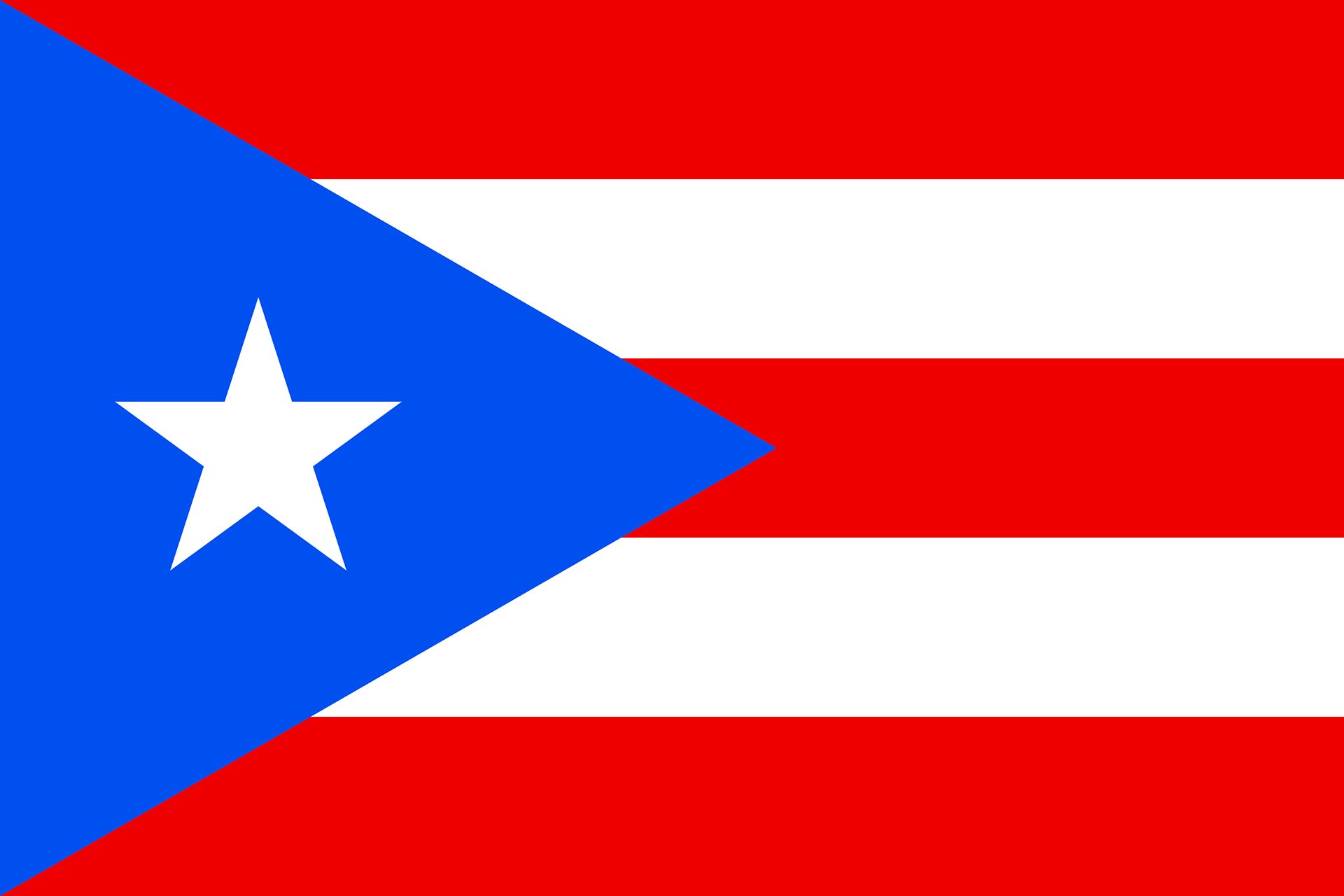
Flag
Five equal horizontal bands of red (top and bottom)
alternating with white; a blue isosceles triangle based on the hoist side
bears a large white five-pointed star in the center; design based on the
Cuban flag.
In addition, each of the municipalites of Puerto Rico have
city flags that represent
what each city stands for.
Read more about the Puerto Rican flag
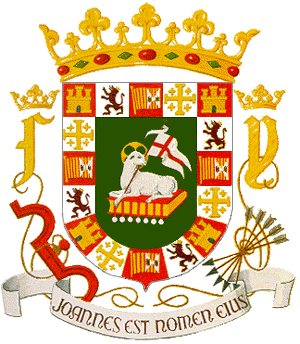
Coat of Arms
The coat of arms features a green shield with a lamb, a book, and a flag, surrounded by a border with castles and lions, crowned with a royal crown.
Elements
- Lamb: Represents peace and the Lamb of God
- Book: The Bible
- Castles: Kingdom of Castile
- Lions: Kingdom of Leon
- Flags: Cross of Jerusalem
Read more about Coat of Arms
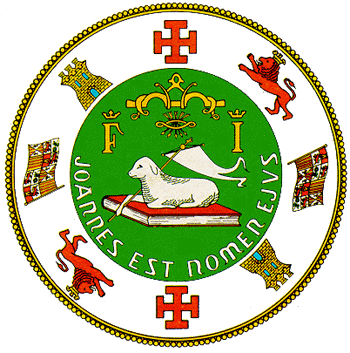
Seal of Puerto Rico
The Great Seal of Puerto Rico centers on the Lamb of God resting on a book with a bannered cross, surrounded by symbols reflecting the island's Spanish heritage and Christian tradition.
Elements
- Lamb (Agnus Dei): Represents Saint John the Baptist and symbolizes faith, sacrifice, and peace.
- Book: The Bible, signifying Christian tradition and spiritual foundation.
- Banner with Cross: Symbol of the Resurrection and Christian victory.
- Castles: Represent the Kingdom of Castile.
- Lions: Represent the Kingdom of Leon.
- Crosses (Jerusalem Cross): Symbol of Christianity and Spanish heritage.
- Latin Motto - "Joannes Est Nomen Eius": "John is his name," honoring the island's original name, San Juan Bautista.
Explore the History and Meaning Behind the Seal
Official Name:
Commonwealth of Puerto Rico.
(Estado Libre Asociado de Puerto Rico).
Original Name:
In 1493, during his second voyage, Christopher Columbus landed
in Puerto Rico. He named the island "San Juan Bautista", in honor of John the Baptist. In 1508 the
Spanish government appointed Juan Ponce de
León the first governor of the island, under this command the original settlement was relocated to
a nearby coastal islet and named Puerto Rico (Rich Port). Sometime during the 1520s, confusion over the
names led to a switch, the island took the name of Puerto Rico and the town became San
Juan.
National Holiday: November 19 (The Discovery of Puerto Rico
date).
All U.S. government holidays are celebrated in Puerto
Rico. Additionally, there are nine local holidays, which
usually honor important leaders or events in the island's
history. Government offices, banks, the post office and most stores are closed
on the official holidays.
National Hymn (Anthem): "La
Borinqueña"
The national hymn reflects the character of the people very
accurately. The air, "La Borinqueña ", recalls the
island's Indian past. It was originally a dance measure. Now in a slower
tone, and the orchestration of Ramón Collado, the Puerto Rican
anthem has a gracious, melancholic tone, agreeably free of the
bombast that often characterizes national anthem.
Motto: Joannes Est Nomen Eius (John is his name)
Tourism Motto: Puerto Rico lo hace mejor! (Puerto Rico does it
better!)
Puerto Rico's Symbols
Explore the history and meaning behind Puerto Rico's flag, coat of arms, anthem, Great Seal, natural symbols, municipal emblems, and historic flags.
Discover Puerto Rico's Symbols →
Related Materials
Books
Maps
Other Resources
How to Cite This Webpage
Don't forget to cite this webpage on your project sources (APA Style).
Rivera, M.
(2026, September 29).
(none) .
Welcome to Puerto Rico!
Retrieved
14 October 2026,
from
https://www.topuertorico.org/government.shtml.
Did You Know?
By the late 19th century, Puerto Rico was one of the world's leading coffee exporters, with coffee grown primarily in the island's central mountains.
Get Our Newsletter
Discover new places, local flavors, upcoming events, cultural stories, and some of our favorite finds from around the island.
Read the Latest ¡La Isla! Newsletter
Follow Along