
Ponce, Puerto Rico
(PON-sai)
Ponce is one of Puerto Rico's most historic and culturally rich cities. With a population of 194,636, Ponce is Puerto Rico's second largest city in Puerto Rico (San juan is the first and Mayaguez is the third). This southern city is famous for its rich history, elegant architecture, museums, plazas, festivals, and deep sense of local pride. For travelers who want to explore beyond San Juan, Ponce offers a slower, more traditional look at Puerto Rican life.
Overview
Culture & History
Museums & Cultural Sites
Outdoor & Scenic Experiences
Nearby & Unique Experiences
Shopping & Modern Ponce
The Pearl of the South
Ponce is commonly known by several names: "La Perla del Sur" (Pearl of the South), "La Ciudad de los Leones" (City of Lions), or "La Ciudad de las Quenepas" (Genip City). Ponce is also known as the "Ciudad Señorial" (Majestic or Noble City), because of its many beautiful neoclassical buildings and facades.
Why Visit Ponce?
Ponce offers a different side of Puerto Rico—less crowded than San Juan, but rich in history, art, and local culture. Its plazas, museums, and iconic architecture make it one of the island's most culturally significant cities.
Why I Love Ponce

Ponce has always held a special place in my heart. Although I grew up in Coamo, it was in Ponce that I attended the University of Puerto Rico at Ponce, a chapter of my life filled with learning, friendships, and independence. I spent countless days walking the city's historic streets between classes, admiring its beautiful architecture, relaxing in Plaza Las Delicias, and discovering cafés, museums, and local shops that gave the city its unique character.
Over time, Ponce became much more than a place where I studied—it became a city I truly came to know. Walking through the historic district, visiting Parque de Bombas, and enjoying the vibrant cultural life helped me appreciate why Ponce is often called "La Perla del Sur" (The Pearl of the South).
Every time I return, I find myself revisiting familiar streets and landmarks that bring back wonderful memories. Whether you're exploring its museums, enjoying its culinary scene, or simply strolling through downtown, Ponce offers an authentic experience that beautifully blends history, culture, and everyday Puerto Rican life. It's a city I never grow tired of recommending to visitors.
This is one of those places where I don't just know the attractions—I remember what it felt like to be there. That connection makes every visit feel a little like coming home.
Things I Wish Visitors Knew
Many people visit Ponce as a day trip. I think it deserves at least one night. The city has a completely different atmosphere after the cruise passengers leave.
Before You Go
Ponce will always hold a special place in my heart because it's where I attended the University of Puerto Rico. While studying there, I came to appreciate the city's slower pace, beautiful architecture, and rich cultural heritage. Beyond its famous landmarks, I remember walking through the historic streets, discovering local cafés, and realizing that every visit revealed something new. To me, Ponce isn't just another destination—it's a city that became part of my own story.
If I Only Had One Day in Ponce
I'd start the morning at Plaza Las Delicias and Parque de Bombas before touring the Museo de Arte de Ponce or Castillo Serrallés. After lunch at a local restaurant, I'd visit the Tibes Indigenous Ceremonial Center and finish the day with a sunset stroll along La Guancha. It's a wonderful introduction to Puerto Rico's southern coast and the city's rich cultural heritage.
Top Things to Do in Ponce
From iconic landmarks to hidden gems, Ponce rewards curious visitors at every turn.
Culture & History
Ponce is known for its festivals, music, art, and traditions. The city's most famous celebration is the Ponce Carnival, one of the oldest and most colorful festivals in Puerto Rico.
Parque de Bombas
Ponce's most iconic symbol — a stunning red-and-black Moorish-style firehouse.
Originally built in 1882 for an exposition and from 1883 to 1989 it served as headquarters of the
Ponce Fire Corps. In 1990, the firehouse was reopened as a museum celebrating the city's firefighting history, there
are exhibits on the second floor, and the municipal band plays a free
concert every Sunday night. Open Wed-Mon 9:30am-6pm - free admission (787) 284-4141, ext. 342.

Museo de Arte de Ponce
One of the finest art museums in the Caribbean, housing over 4,500 works including European Renaissance masterpieces and an exceptional pre-Raphaelite collection.
Plaza Las Delicias
The vibrant heart of Ponce — a grand plaza flanked by the Cathedral of Our Lady of Guadalupe and the iconic Parque de Bombas, alive with fountains, music, and culture.

Catedral de la Guadalupe
Built in 1883, this beautiful cathedral sits in the center of
the plaza, surrounded by lovely fountains. Located on the Plaza Degetau, it is one of Ponce's most important religious landmarks.
(787) 842-0134
Teatro La Perla
An architectural jewel completed in 1864, this neoclassical theater is among the finest in the Caribbean. remains one of the most visible symbols
of the economic prosperity of Ponce during the mid-19th century. Designed by Juan Bertoli, an Italian-born resident of
Puerto Rico who studied in Europe, it was destroyed by an earthquake in 1918, and rebuilt in 1940 according to the
original plans; it reopened to the public in 1941.
Its ornate interior hosts opera, ballet, and cultural performances year-round. Located on Mayor St., (787) 843-4080.

Museums & Cultural Sites
Museo de Arte de Ponce
A world-class museum with over 1,000 paintings and 400 sculptures, including European masters like Velázquez, Rubens, and Rodin, along with Puerto Rican works.
Museo de la Historia de Ponce (Museum of the History of Ponce)
What began in 1911 as the intimate Salazar family home eventually became a sanctuary for the city's collective memory. In 1992, after decades of private use, the historic halls were reimagined and opened to the public, marking the birth of the first Puerto Rican museum entirely devoted to the history of its people.
It is the first museum in Puerto Rico dedicated entirely to a city's history, showcasing documents and artifacts from Ponce's past.
Located at 53 Calle Isabel. Open Wed-Mon, 9am-5pm, admission US $3 for adults, US $1 for children, (787) 844-7071.
Ponce Museum of Art
Designed by the world-renowned architect Edward Durell Stone (famed for New York's MoMA), this museum is a modernist masterpiece and the most prestigious art institution in the Caribbean. The building itself is an architectural marvel, featuring seven interconnected hexagons, glass cupolas, and elegant curved staircases.
The museum was established by a foundation created by Luis A. Ferré (Governor of Puerto Rico, 1968–1972) and houses a world-class collection of over 1,000 paintings and 400 sculptures. Open daily 10am - 5pm. Admission: $4 Adults / $2 Children. (787) 848-0511 or (787) 848-0505.
Museo de la Música Puertorriqueña
Located just a few blocks away from the history museum you were asking about. It is situated in the historic downtown district of Ponce.
Explores Puerto Rico's musical heritage through instruments, memorabilia, and cultural exhibits.
Calle Isabel 50 (at the corner of Calle Salud). Open Wed–Sun, 8:30 AM – 4:00 PM. Admission is often free or a nominal fee of around $2–$3.
Casa Paoli
Houses exhibits on the opera singer's life as well as a shop
displaying colorful papier-mache masks used in Ponce's annual Carnival celebrations. Mon-Fri 10am-noon, 2-5pm, (787) 840-4115.
Museo Casa Wiechers-Villaronga
A house designed by famous architect Alfredo Wiechers for his own family
in the early 20th century, contains the original 1911 furniture
and architectural details traditional in Ponce urban homes. Recently restored by the Instituto
de Cultura Puertorriquena. Open Wed-Sunday, 8am-4:20pm, (787) 848-7016.
Museum of Puerto Rican Music
Explore the island's vibrant sonic heritage at the Museo de la Música Puertorriqueña. The museum traces the evolution of Puerto Rican music through memorabilia of legendary artists and a diverse collection of Taíno, Spanish, and African instruments.
Open Wednesday-Sunday 9 am - noon and 1-5:30 pm, admission $1. Located on 70 Christina St., (787) 844-9722.
Art Museum of Frame Masters
The museum features fine arts, paintings, sculptures,
canvas reproductions, expert framings, and moldings.
Located on 715-A Tito Castro, (787) 848-0307.
Casa Armstrong-Poventud
A magnificent example of the neoclassical architectural heritage of the island,
its white-domed building on the west side of the main square houses
the Puerto Rican Institute of Culture and the Puerto Rican Tourism
Company's regional offices. Guided tours are available.
Located in front of the town square. Mon-Fri 8am-noon, 1-4:30pm. (Closed, awaiting restoration.)
House of the Ponce Massacre
The House of the Ponce Massacre stands as a solemn memorial to one of the most significant and tragic political events in Puerto Rican history. The museum is located in the very building where the events of March 21, 1937, unfolded, serving as both a historical archive and a monument to those who lost their lives.
Located on the corner of Calle Marina and Calle Aurora. (787) 284-4141.
Experience Ponce
Outdoor & Scenic Experiences
La Guancha Paseo Tablado (La Guancha Boardwalk)
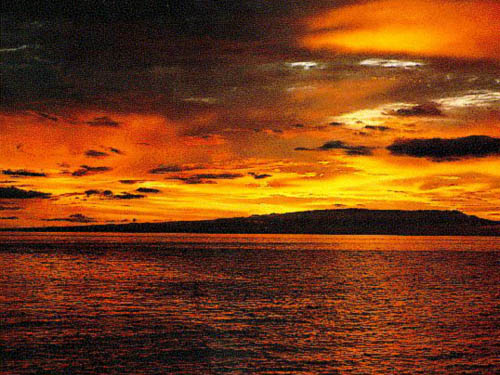
A lively waterfront boardwalk where locals gather to enjoy fresh seafood, live music, and spectacular sunsets over the Caribbean Sea.
Weekend evenings are especially festive.
The pier is also the departure point for a regularly scheduled weekend ferry to Caja de Muertos.
Caja de Muertos (Coffin Island or Dead Box Island)
A small island of pristine beaches, an old lighthouse (built in 1887) and a marked snorkel trail (under
construction). The island is approximately 2.75 km wide by 1.85 km long, with a total area of 202 hectares. The island has no permanent inhabitants.
Ferry services run on Saturday, Sunday and holidays from 9am and return to 5pm.
El Vigia Hill & La Cruceta
For a incredible view of how the mountains meet the sea at Ponce,
drive to the summit of El Vigia Hill, where scouts once scanned for
attacking ships. Visitors can ascend La Cruceta del Vigia, a 100-foot
observation tower, and view of Ponce and Caja de Muertos. Built in 1984, the cross is a memorial to the
Spanish garrison established atop of the hill to watch for smugglers' ships attempting to unload
contraband on the southern coastline of Puerto Rico back in 1801.

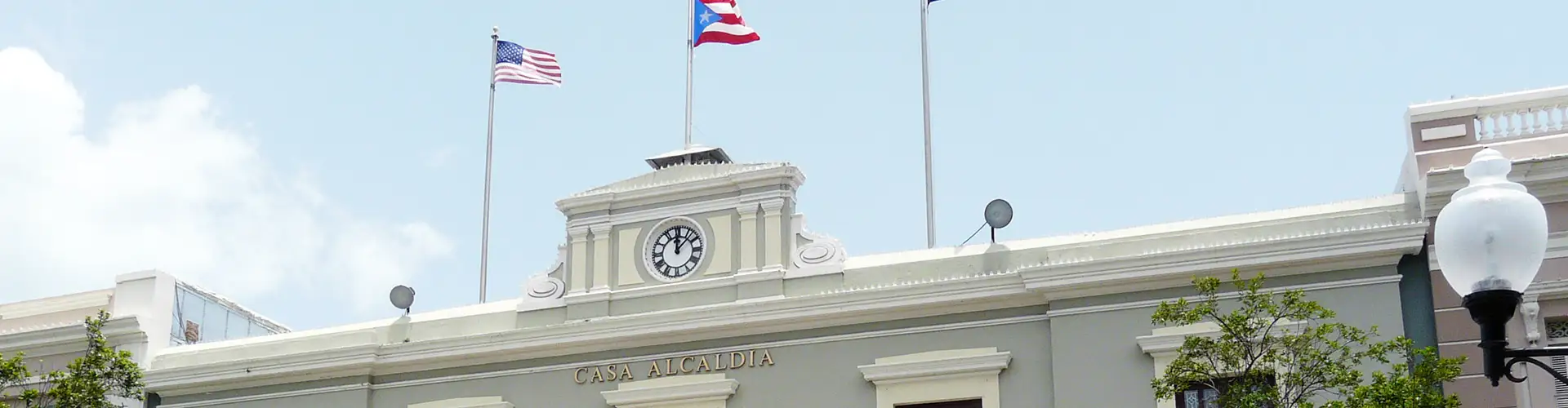
Casa Alcaldía (city hall)
It is the oldest colonial building in the city, dating to the 1840s.
Central Mercedita
Founded in 1870 by Don Jose Ramón de Aponte. In 1938, the facilities packed about 60,000 tons of sugar.
Cardona Island
South of Ponce you can find Cardona Island, where a 19th century lighthouse still stands, great for a quick escape and scenic views.
Nearby & Unique Experiences
Castillo Serralles (Serralles Castle)
Located near to El Vigia Hill, this stunning Spanish Revival mansion was once the residence of the powerful Serrallés family—the dynasty behind the world-famous Don Q rum.
Completed in the early 1930s by architect Pedro de Castro, the castle is a masterclass in 1920s-style Spanish Revival design. The estate features an elegant indoor patio with fountains and formal gardens that mirror the home's sophisticated geometry. Look closely, and you'll see the "flame of the jungle" plants are manicured to perfectly match the intricate ironwork of the house.
Today, the mansion serves as a museum dedicated to the legacy of Puerto Rico's sugar and rum industries. Admission $5 adults, $2.50 seniors, $2.50 children under 16. Call for group reservations, (787) 259-1774.
Tibes Indian Ceremonial Center
Discovered in 1975 afterhurricane rains uncovered pottery and only a small portion has so far
been excavated. This site is home of the oldest cemetery uncovered up to date in the
Antilles, with 186 skeletons unearthed from A.D. 300. It is also considered
the largest and the most important archaeological finds in the West Indies.
This archeological discovery affirms that the Igneri Indians (pre-Taino) did
not completely disappear without leaving traces of their existence other than samples of ceramic pottery.
At Tibes, there is proof that the Igneris were farmers, fishermen, and hunters of birds and small animals. On April 14, 1978, it was listed in the National Register of Historic Places.
Since April 30, 1982, the site opened its doors to the public. Today, it is a popular a tourist attraction, featuring seven bateyes (ball fields), some carved with petroglyphs, said to have been used for a soccer like game. On one of two dance grounds, stones line up with the sun during the equinox and solstice, making Tibes a pre-Columbian astronomical observatory.
There is a reconstructed Taíno village with thatched roof bamboo huts, a museum, an exhibition hall that presents a documentary about Tibes, a cafeteria, and a souvenir shop. Open Tue-Sun 8:30am-4pm. Admission: Adults $2, children $1, (787) 840-2255.
Hacienda Buena Vista (Buena Vista Plantation)
Step back into the 19th century at Hacienda Buena Vista, the most meticulously preserved coffee plantation in Puerto Rico. Established in 1833 by Don Salvador de Vives, this historic estate began as a fruit farm before evolving into a thriving coffee plantation and corn mill in 1845. After nearly a century of operation, it was beautifully restored by the Puerto Rico Conservation Trust and reopened as a living museum in 1986.
Located on Rte. 10, Barrio Magũeyes, km 16.8. Open Fri-Sun, 2-hour tours at 8:30am, 10:30am, 13:30am and 15:30am; groups of 20 or more admitted Wed and Thur; US$5 adults, US$2 children under 12. Reservations are required. Weekdays (787) 722-5882, weekends (787) 848-7020.
Ponce School of Fine Arts
A 19th-century building, originally served as the Spanish
military headquarters and known as El Castillo. It later became the Ponce Jail, but in 1992 it was inaugurated
as the Ponce School of Fine Arts.
Shopping & Modern Ponce
Plaza del Caribe
It is the most elegant shopping mall in Ponce. You will find over 100 shops as well as six theaters and a restaurant area to satisfy their entertainment and gastronomic
needs. Mon-Sat 9am-9pm; Sun 11am-5pm, (787) 259-8989.
Fox Delicias Mall
Located in front of the plaza in Ponce. Restaurants occupy the entire
bottom floor, while the many shops and a cafe-theater are on the second story. Mon-Thu 8am-9pm; Fri-Sat 8am-11pm;
Sun 8am-9pm, (787) 259-6413.
Centro del Sur Shopping Center
It houses about 50 shops. Mon-Thu 9am-6pm;
Fri 9am-9pm; Sat 9am-6pm; Sun 10am-5pm,
(787) 725-4600.
Things Visitors Don't Expect
Many first-time visitors are surprised by how different Ponce feels from San Juan. The pace is slower, the architecture is more eclectic, and the city has a distinct identity shaped by centuries of commerce, art, and local traditions.
Featured Tours
One Day in Ponce
Start your morning in Plaza Las Delicias, visiting Parque de Bombas and the cathedral. Spend the afternoon at the Museo de Arte de Ponce or Castillo Serrallés, then end the day near the water at La Guancha.
Neighborhoods
Each barrio has its own distinct personality — from colonial grandeur to Caribbean fishing village charm.
Centro Histórico
Historic District
The beating heart of Ponce — Plaza Las Delicias, Parque de Bombas, La Perla Theater, and hundreds of Creole-style buildings lining pedestrian-friendly streets.
Plaza Las Delicias · Parque de Bombas · Cathedral · Teatro La Perla
El Vigia
Hilltop Viewpoint
Climb to Cerro El Vigía for sweeping panoramic views of the city and the Caribbean. Home to a massive cross and the Castillo Serrallés rum mansion.
Castillo Serrallés · El Vigía Cross · Panoramic views · Museo del Castillo
La Guancha
Waterfront
Ponce's southern waterfront district where locals come for weekend seafood feasts, live music, and boat trips to Coffin Island's pristine beaches.
Boardwalk · Seafood kiosks · Coffin Island ferry · Weekend markets
Playa de Ponce
Coastal Village
An authentic fishing village that predates the city itself, with colorful wooden houses, working fishing boats, and a distinctly unhurried Caribbean pace.
Fishing village · Fresh catch restaurants · Lighthouse · Local culture
Barrio San Antón
Cultural Barrio
A historic working-class neighborhood known as the birthplace of the bomba and plena musical traditions that are central to Puerto Rican cultural identity.
Bomba & plena music · Community festivals · Local crafts · Authentic Ponce life
Urbanización Villa del Rey
Modern District
Ponce's contemporary commercial corridor with shopping centers, restaurants, and modern amenities serving as the city's economic hub.
Shopping malls · Restaurants · Hotels · Business district
Plan your Visit
Ponce is located on Puerto Rico's southern coast, about 1.5 to 2 hours from San Juan by car. A rental car is recommended if you plan to explore nearby attractions.
Getting There
By Air
Mercedita Airport (PSE) serves Ponce with regional flights. For international arrivals, fly into Luis Muñoz Marín (SJU) in San Juan and drive ~90 minutes south via PR-52 (Luis A. Ferré Highway).
By Públicos
Shared van taxis (públicos) run between Ponce and major towns, departing from the Ponce Terminal de Carros Públicos near Plaza Las Delicias. Affordable but slower than driving.
By Car from San Juan
Take PR-52 south from San Juan — approximately 75 miles and 90 minutes in light traffic. The highway crosses the central mountains with beautiful scenery. A rental car is highly recommended.
Practical Tips
Ponce sits on the south coast — significantly drier and often hotter than San Juan. Pack sunscreen and stay hydrated. The city is very walkable around the historic center.
Getting Around
Rental Car The most flexible option. Major car rental agencies are at Mercedita Airport and in the city. Parking is generally available near the plaza and waterfront.
Trolley Ponce's free historic trolley loops around the downtown area, stopping at major attractions. A fun and easy way to get between the plaza, museum, and El Vigía hill.
Walking The historic center is very compact and best explored on foot. From Plaza Las Delicias you can walk to most downtown attractions within 10–15 minutes.
Ride-share & Taxis Uber operates in Ponce. Traditional taxis can be found near the plaza and major hotels. Agree on a price before departure if not using a metered cab.
Where to Stay
- Hotel Melia Ponce (historic downtown) - (787) 842-0260
- Hampton Inn Ponce
- Ponce Hilton & Casino (beachside) - (787) 842-0260
- Holiday Inn Express Ponce - (787) 844-1200
- Howard Johnson Ponce
- Fox Delicias Hotel - (787) 290-5050
- Airbnb in historic homes
- Guest houses near plaza
- Hostels in the centro
Local Flavors & Festivities
Where to Eat
- La Casa del Chef
- El Negocio de Panchi
- Vistas Restaurant & Cocktail Lounge
- Campioni Pizza Birra & Tapas
- Vistas Restaurant & Cocktail Lounge
- Chef's Creations
- King's Cream (dessert)
- Bahías Restaurant
- Costa Bella Oceanfront Restaurant
- Restaurants at La Guancha
- Marina seafood kiosks
Own a restaurant in Ponce? Would like to be featured on this web site? Send me a note.
Festivals and Events
Displaying 8 results.
-
Ponce Art Walk
- Year-round
Monthly cultural event showcasing galleries, museums, artists, live music, artisan vendors, historic architecture, and local businesses throughout downtown Ponce.(787) 284-4141
-
Carnaval Ponceno
- February
Puerto Rico's largest and most famous carnival featuring colorful vejigante masks, elaborate parades, live music, dancing, artisan vendors, traditional cuisine, and centuries-old cultural traditions dating back to 1858. Celebrations center around Plaza Las Delicias and the historic downtown district.(787) 840-4141
-
Festival de Teatro Luis Torres Nadal
- February
Annual performing arts festival at Teatro La Perla celebrating the legacy of playwright Luis Torres Nadal with theater productions, music, workshops, and performances by local and international artists.(787) 843-4080
-
Feria Artesanal de Ponce
- March
One of Puerto Rico's premier artisan fairs featuring handcrafted artwork, demonstrations, live music, traditional food, and artisans from across the island at Plaza Las Delicias.(787) 844-8240
-
Festival Playa de Ponce
- May
Community beach festival held in La Playa de Ponce featuring live music, food kiosks, sporting events, family activities, artisan vendors, and entertainment along the waterfront.(787) 840-4141
-
Festival de Bomba y Plena de San Anton
- November
Celebrates the birthplace of Puerto Rican bomba and plena traditions with live performances, dancing, workshops, cultural exhibits, and traditional Afro-Puerto Rican cuisine in the historic San Antón neighborhood.(787) 840-4141
-
Fiestas Patronales de Nuestra Señora de Guadalupe
- December
Annual patron saint festival honoring Our Lady of Guadalupe with religious processions, concerts, carnival rides, artisan vendors, traditional Puerto Rican food, and family entertainment.(787) 840-4141
-
Las Mañanitas
- December
Beloved pre-dawn tradition held every December 12 honoring Our Lady of Guadalupe with a procession, mariachi serenade, Mass at the Cathedral, breakfast, and cultural festivities throughout the historic center.(787) 284-4141
Nature & Resources
Geography
Ponce is located in the Southern Coastal Plain region (about 5 km (3 mi) from the south central coast of the island), south of Adjuntas, Utuado and Jayuya; east of Peñuelas; and west of Juana Díaz.
Ponce is made up of 19 barrios (PDF) (wards/districts):
- Anón
- Bucaná
- Canas
- Capitanejo
- Cerrillos
- Coto Laurel
- Guaraguao
- Machuelo
- Maguelles
- Maraguez
- Marueño
- Monte Llano
- Portugués
- Pueblo
- Quebrada Limón
- Real
- Sabanetas
- San Patricio
- Tibes
- Vayas
The town is bathed by many rivers including: San Patricio, Cerrillos, Chiquitos, Inabon, Pastillo, Canañas, Bucana, and Portugués.
Climate
Annual precipitation is approximately 36 inches on the coast and 48 inches in the interior and the average temperature is 75°F. Precipitation is the lowest in February, with an average of 1 inch. Most precipitation falls in October, with an average of 6 inches. August is the hottest month of the year.
PONCE WEATHER10 Day Forecast from weather.com
History
Ponce was founded in 1692 by Juan Ponce de León y Loaíza, grandson of the Spanish explorer Juan Ponce de León. Strategically located on Puerto Rico's southern coast, the city quickly grew into an important economic and cultural center during the Spanish colonial period. By the 19th century, Ponce had become the leading city of the island's south, driven by the prosperity of the sugar industry and its role in regional trade.
Much of Ponce's historic center dates back to the late 17th and 18th centuries and has been carefully preserved as one of Puerto Rico's cultural treasures. Its plazas, churches, ornate colonial homes, and iconic landmarks—such as the distinctive Parque de Bombas—reflect a rich architectural heritage shaped by both Spanish and Caribbean influences.
Ponce carries a unique distinction in Puerto Rico—it has always maintained a strong identity independent of the capital. From the 19th-century sugar boom onward, the city cultivated a deep sense of civic pride, investing in theaters, museums, and a distinctive Creole architectural style that continues to define its character today.
The city's motto, "Ponce es Ponce" (Ponce is Ponce), captures this spirit perfectly. It reflects a community proud of its traditions, culture, and way of life—from its vibrant arts scene to the renowned Carnaval Ponceño, one of the most elaborate and celebrated festivals in the Caribbean.
Moments in History
Ponce founded as a Spanish colonial town, named after Juan Ponce de León's great-grandson.
Slow agricultural growth centered around cattle ranching and subsistence farming.
Sugar boom transforms Ponce into Puerto Rico's wealthiest city. Creole merchant class builds grand mansions and public institutions.
Parque de Bombas built as the centerpiece of the Municipal Exhibition — becomes the city's enduring symbol.
U.S. occupation after the Spanish-American War. Ponce transitions from colonial Spanish rule.
Industrial development and petrochemical industry bring new economic activity to the south coast.
Museo de Arte de Ponce, founded by Luis Ferré, becomes one of the premier art museums in Latin America.
Ponce undergoes urban revitalization, preserving its extraordinary Creole architectural heritage while building a modern cultural identity.
Notable People
Ponce has produced artists, musicians, politicians, and visionaries who left marks far beyond the city's borders.
Famous Ponceños
Luis A. Ferré
1904–2003
Politics & Arts
Governor of Puerto Rico (1969–1973), founder of the Museo de Arte de Ponce and the New Progressive Party. Deeply shaped the city's cultural landscape.
Juan Morel Campos
1857–1896
Music
Composer and musician considered the father of the danza, Puerto Rico's most distinctive classical music form. Created over 300 compositions during his short life.
Ernesto Ramos Antonini
1898–1963
Law & Politics
Pioneering attorney and politician who fought for civil rights in Puerto Rico, first Black Puerto Rican to serve as Speaker of the Puerto Rico House of Representatives.
Tite Curet Alonso
1926–2003
Music
Prolific salsa composer who wrote classics for Celia Cruz, Cheo Feliciano, and Ismael Rivera. One of the most important figures in Latin popular music.
Read more about famous Ponceños
City Symbols
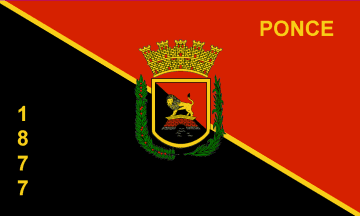
Flag
The flag consist of a rectangular cloth divided by a diagonal line, creating two equal
isosceles triangles, starting from the top left hand corner and ending on the lower
right hand corner. The top triangle is red; the bottom triangle is black. In the center
of the flag sits the shield of the municipality. Under this shield is the number 1877,
the year of the founding of the city, and above the shield is the word Ponce.
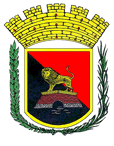
Coat of Arms
The coat of arms of the municipality is based on the design of the official mayoral seal
that was adopted in 1844 under the administration of mayor Salvador de Vives. The coat
of arms of Ponce consists of a escutcheon (shield) in the Spanish tradition. This shield
has a field with a party per bend division. The division runs from top left to bottom
right. The field is read and black, bordered with a fine golden line. In the center
of the shield is the figure of an erect lion standing on a bridge. The top of the bridge
is a golden, the middle is red bricks, and the base foundation is gray rocks. Under
the bridge there are gray wavy lines. Over the shield rests a five-tower golden stone
wall with openings in the form of red windows. To the left of the shield is a coffee
tree branch with its fruit, and to the right of the shield is a sugar cane stalk.
The symbols of the shield are as follows: The field represents the flag of the
municipality of Ponce, divided diagonally in the traditional city colors: red
and black. The lion over the bridge alludes to the last name of the conqueror and
first governor of Puerto Rico, Juan Ponce de Leon. The waves under the bridge allude
to the Rio Portugues, on the banks of which the city was born. The coronet in the
form of a five-tower mural crown above the shield allude to the Spanish crown, through
which the settlement obtained its city charter. The coffee tree branch and the sugar
cane stalk represent the main agricultural basis of the economy of the young municipality.
Anthem
The municipal anthem of Ponce is a heartfelt tribute to Puerto Rico's "Pearl of the South." Its lyrics celebrate the city's rich history, architectural beauty, cultural traditions, and the deep affection that generations of Ponceños have for their hometown. The song expresses civic pride while honoring Ponce's contributions to Puerto Rican art, commerce, education, and music.
The anthem is traditionally performed during municipal ceremonies, the Fiestas Patronales de Nuestra Señora de Guadalupe, and other civic celebrations. Its stirring melody and nostalgic lyrics continue to strengthen the bond between the city and its residents, both on the island and throughout the Puerto Rican diaspora.
Human & Capital Resources
Economy
Ponce is an important trading and distribution center, and has a port of entry; Playa de Ponce Port is one of the busiest ports in the Caribbean area, handles coffee, tobacco, molasses, rum, and bananas and other tropical fruits. Its principal manufactures include textiles, shoes, cement, paper, electrical devices, and metal products. Industries include tourism, the processing of agricultural products, rum distilling, canning, and diamond cutting.
Education
Ponce has long been recognized as one of Puerto Rico's leading educational centers, offering a wide range of public and private schools as well as some of the island's most respected colleges and universities. The city is home to the University of Puerto Rico at Ponce, which offers undergraduate programs in business administration, education, engineering technologies, social sciences, and the natural sciences while serving students from Puerto Rico's southern region.
Ponce is also home to the Pontifical Catholic University of Puerto Rico (PUCPR), one of the island's oldest and largest private universities. Founded in 1948, the university offers undergraduate, graduate, and professional degrees in fields including law, architecture, engineering, business, health sciences, education, psychology, and the humanities. Additional institutions, such as the Ponce Health Sciences University, have earned international recognition for their medical, psychology, biomedical sciences, and public health programs, attracting students from Puerto Rico, the United States, and around the world.
With its diverse educational institutions, specialized professional schools, and strong commitment to research and innovation, Ponce continues to serve as the academic capital of southern Puerto Rico, preparing students for careers in healthcare, business, engineering, education, science, and public service.
Demographics *
Population
137,491
Land Area: 114.76 sq mi
Density: 1,175.30 per sq mi
Median Age: 43.9
Sex: 52% female
Economics **
$11,680
Median household income: $17,263
Puerto Rico: $21,058
Persons below poverty line: 51.2%
Housing, families and educational attainment *
Number of households
52,439
Housing units density:
606.7 (2013)
Persons per household: 2.52
High school grad or higher: 77.9%
Marital status: 33% married
* U.S. Census Bureau 2020 data, unless otherwise noted - Source: Quick Facts Puerto Rico.
** U.S. Census Bureau 2016-2020
Map References
Coordinates: 18.0000° N, 66.6167° W
ZIP Code: 00715, 00716, 00717, 00728, 00730, 00731, 00732, 00733, 00734, 00780
Driving Distance from San Juan: 76.7 miles
Driving Time: 1 hour, 47 minutes
Frequently Asked Questions
Where is Ponce located?
Ponce is located on Puerto Rico's southern coast, about 75 miles (121 km) southwest of San Juan.
What is Ponce known for?
Ponce is known as the "Pearl of the South" and is famous for its historic architecture, museums, Plaza Las Delicias, Parque de Bombas, and rich cultural heritage.
What are the top attractions in Ponce?
Must-see attractions include Parque de Bombas, Museo de Arte de Ponce, Castillo Serrallés, Plaza Las Delicias, Tibes Indigenous Ceremonial Center, and La Guancha Boardwalk.
Why is Parque de Bombas famous?
Parque de Bombas is one of Puerto Rico's most iconic landmarks. Built in 1882 as the island's first fire station, its distinctive red-and-black design has become a symbol of Ponce.
Can you visit Castillo Serrallés?
Yes. Visitors can tour the beautifully restored mansion, explore its gardens, and learn about the Serrallés family and Puerto Rico's rum industry while enjoying panoramic views of Ponce.
Is Ponce a good place to stay?
Yes. Ponce offers historic hotels, modern accommodations, museums, shopping, and easy access to southern Puerto Rico's beaches, mountains, and natural attractions.
Do you need a rental car in Ponce?
A rental car is recommended for exploring attractions outside the historic district, but downtown Ponce is walkable and many of its major landmarks are within a short distance of each other.
How far is Ponce from San Juan?
Ponce is approximately 1½ to 2 hours from San Juan by car via PR-52.
What museums can you visit in Ponce?
Ponce is home to several outstanding museums, including the Museo de Arte de Ponce, Museo Castillo Serrallés, Parque de Bombas Museum, and the Tibes Indigenous Ceremonial Center.
When is the best time to visit Ponce?
Ponce can be visited year-round, but the dry season from December through April offers the most pleasant weather for sightseeing, festivals, and exploring the city's historic district.
Other Resources
Did You Know?
The island was known as Borikén (also spelled Borinquén) before Spanish colonization.
Get out Newsletter
Discover new places, local flavors, upcoming events, cultural stories, and some of our favorite finds from around the island.Read the Latest ¡La Isla! Newsletter →
Follow Along


