

Jayuya, Puerto Rico
(hah-YOO-yah)
Located high in Puerto Rico's Central Mountain Range, Jayuya is a destination unlike anywhere else on the island. Known as "La Capital Indigena" (the indigenous capital), the municipality is rich in Taíno heritage, dramatic mountain landscapes, archaeological treasures, and outdoor adventures. Jayuya name comes from a local Indian Chief Hayuya which means "lugar de guayo" (place of guayo).
Overview
Why Visit Jayuya
Jayuya is perfect for travelers looking to experience Puerto Rico beyond the beaches. Its mountainous scenery, archaeological sites, waterfalls, coffee farms, and rich Taíno culture make it one of the island's most unique destinations. Cooler temperatures throughout the year make hiking and sightseeing especially enjoyable, while local festivals celebrate the traditions that have defined this central mountain community for generations.
Top Things to Do in Jayuya
Museo El Cemí
Since 1989 Museo El Cemí is one of Puerto Rico's premier museums dedicated to Taíno history and archaeology, featuring exhibits on indigenous culture, artifacts, and the famous giant Taíno ceremonial stone.
Toro Negro State Forest
Covering more than 7,000 acres across Jayuya, Ponce, Orocovis, Ciales, and Juana Díaz, Toro Negro State Forest protects one of Puerto Rico's richest mountain ecosystems. The forest features hiking trails, scenic overlooks, rivers, waterfalls, and native wildlife, making it one of the island's premier destinations for outdoor recreation. Visitors can also camp at designated campgrounds with advance permits.
The forest is home of the three highest peaks in the island. Cerro de Punta, Cerro Jayuya and Cerro Rosa.
Cerro Punta
Standing 4,390 feet (1,338 m) above sea level, Cerro Punta is Puerto Rico's highest peak. On clear days, visitors can enjoy panoramic views stretching toward both the Atlantic Ocean and the Caribbean Sea. The summit is easily accessible by road, while nearby hiking trails offer additional opportunities to explore the surrounding mountains.
Tres Picachos State Forest
A protected mountain forest with hiking trails, native wildlife, scenic overlooks, and lush tropical vegetation.
Piedra Escrita
One of Puerto Rico's most significant Taíno archaeological sites, Piedra Escrita features a massive riverside boulder covered with indigenous petroglyphs carved between A.D. 600 and 1200. Located along the Río Saliente, it provides a rare opportunity to experience the island's ancient history in its natural setting.
Archaeological discoveries throughout Jayuya—including the famous Piedra Escrita petroglyphs—demonstrate that the region was an important ceremonial and cultural center for the Taíno people centuries before European contact.
Casa Museo Canales
Housed in a beautifully restored 19th-century coffee plantation home, Casa Museo Canales preserves the legacy of the Canales family, one of the most influential families in Puerto Rico's Nationalist movement. The museum was once home to Rosario Canales, Jayuya's first mayor, and his children Blanca Canales and Nemesio Canales, both prominent figures in Puerto Rican history. Visitors can tour period-furnished rooms, historical exhibits, photographs, and artifacts that tell the story of Jayuya and the events surrounding the Jayuya Uprising of 1950.
Historic Town Center
Jayuya's compact downtown features colorful architecture, the Parroquia Nuestra Señora de la Monserrate, the town plaza, and several monuments honoring the municipality's rich history. Highlights include statues of Nemesio Canales and the Taíno chief Jayuya, sculpted by renowned Puerto Rican artist Tomás Batista, celebrating both the town's indigenous roots and its contributions to Puerto Rico's cultural identity.
Hacienda Gripiñas
A historic mountain hotel and restaurant that has welcomed visitors for decades and serves as a gateway to exploring Jayuya.
The Taíno Capital of Puerto Rico
Few places preserve Puerto Rico's Indigenous heritage as proudly as Jayuya. Nestled high in the Cordillera Central, the municipality is considered the island's cultural heart of the Taíno people. Archaeological sites, ceremonial plazas, petroglyphs, and museums offer visitors an opportunity to learn about the island's first inhabitants long before European arrival.
Jayuya is home to the Cemi Museum, one of Puerto Rico's most important collections dedicated to Taíno culture. Nearby, the ceremonial center at Piedra Escrita features some of the island's finest examples of Indigenous rock carvings beside the Río Jayuya.
Every November, the municipality celebrates the Festival Nacional Indígena, bringing together artisans, musicians, historians, and cultural organizations for a weekend dedicated to preserving Puerto Rico's Indigenous legacy.
More than a tourist attraction, Jayuya serves as a living reminder that Taíno culture continues to influence Puerto Rican identity through language, food, traditions, and place names.
Plan your Visit
Jayuya is best explored at a relaxed pace. Mountain roads, scenic overlooks, archaeological sites, and hiking trails make renting a car the easiest way to experience everything the municipality has to offer.
Getting There
By Air
Luis Muñoz Marín International Airport (SJU) is approximately 2 hours from Jayuya. Rafael Hernández Airport (BQN) in Aguadilla is also about two hours away.
By Car
Puerto Rico Highways PR-10, PR-52, PR-143 and PR-144 provide access into the central mountains. Expect winding roads with spectacular scenery.
Getting Around
Rental Car
A rental car is essential for visiting Jayuya's museums, waterfalls, hiking trails, and mountain viewpoints.
Taxis & Rideshare
Taxis and rideshare may be available, but service can be limited compared with San Juan.
Hiking
Many of Jayuya's attractions are reached by short hiking trails or scenic walks through the mountains.
Nature & Resources
Geography
Located in Puerto Rico's Central Mountain Range, Jayuya is one of the island's highest municipalities. Elevations range from fertile valleys to towering peaks exceeding 4,000 feet. The municipality borders Utuado, Ponce, Adjuntas, Ciales, Orocovis, and Ciales, creating one of Puerto Rico's richest mountain ecosystems.
Much of the municipality lies within or adjacent to Toro Negro State Forest, a protected area spanning more than 7,000 acres. The forest is home to Puerto Rico's three highest peaks—Cerro Punta (4,390 ft), Cerro Jayuya (4,252 ft), and Cerro Rosa (4,144 ft)—offering spectacular scenery and cooler mountain temperatures throughout the year.
Several rivers originate in these mountains, including the Río Grande de Jayuya, Río Toro Negro, and tributaries that feed the Río Portugués and Río Viví, creating waterfalls, natural pools, and fertile valleys that support agriculture and wildlife.
Neighborhoods & Barrios
Jayuya is made up of 10 barrios (PDF) (wards/districts):
- Coabey
- Collores
- Jauca
- Jayuya Abajo
- Mameyes Arriba
- Pica
- Pueblo
- Río Grande
- Saliente
- Veguitas
Climate
Jayuya enjoys one of Puerto Rico's coolest climates. Daytime temperatures are generally several degrees lower than coastal communities, making hiking and outdoor exploration comfortable throughout much of the year. Afternoon mountain showers are common, especially during the wetter months, keeping the forests lush and green year-round.
10 Day Forecast from weather.com
Where to Stay
- Hacienda Gripiñas - originally a coffee hacienda
- Posada Jayuya
Cabins & Eco-Lodges
Several privately owned cabins and eco-lodges throughout the municipality offer secluded mountain stays with panoramic views, perfect for couples and nature lovers.
Vacation Rentals
Mountain homes, cabins, and Airbnb properties provide excellent accommodations for families, hiking groups, and visitors looking to experience rural Puerto Rico.
Local Flavors & Festivities
Where to Eat
- Hacienda Gripiñas Restaurant
- Don Pedro Restauran
- Café Tres Picachos
- Restaurante El Gigante
- Panadería Jayuya
Festivals and Events
Displaying 5 results.
-
Fiesta de Reyes
- January
Traditional Three Kings celebration featuring music, religious activities, community gatherings, children's events, and Puerto Rican Christmas traditions in the town plaza.
-
Festival Jíbaro del Tomate
- April
Annual agricultural festival celebrating Jayuya's tomato harvest with cooking competitions, local produce, artisan vendors, traditional music, folkloric performances, and family activities.
-
Fiestas Patronales de Nuestra Señora de la Monserrate
- September
Annual patron saint celebration honoring Nuestra Señora de la Monserrate with religious processions, live music, artisan kiosks, amusement rides, traditional Puerto Rican cuisine, and family entertainment throughout the town plaza.(787) 828-0900
-
Maratón La Monserrate
- September
Popular road race attracting runners from across Puerto Rico through Jayuya's scenic mountain landscape as part of the patron saint festivities.
-
Festival Nacional Indígena
- November
Puerto Rico's premier celebration of Taíno heritage featuring indigenous ceremonies, traditional music and dance, artisan demonstrations, cultural exhibits, educational activities, parades, and presentations honoring the island's first inhabitants.(787) 828-5010
History
Jayuya was founded in 1883 but made an independent municipality on March 9, 1911, making it one of Puerto Rico's youngest municipalities. However, its history stretches back centuries as one of the island's most important Taíno regions. The fertile mountain valleys were home to indigenous communities long before Spanish colonization, and archaeological discoveries continue to reveal evidence of this rich heritage.
Coffee cultivation became a major industry during the nineteenth and twentieth centuries, while Jayuya's rugged terrain helped preserve many traditional mountain customs. The municipality gained international attention during the Jayuya Uprising of 1950, when Blanca Canales led a Nationalist revolt that became one of the defining moments in Puerto Rico's modern political history.
Today, Jayuya proudly celebrates both its indigenous roots and mountain traditions through museums, festivals, and cultural events.
Moments in History
Taíno communities establish villages throughout the region.
Jayuya officially becomes an independent municipality.
Museo El Cemí begins preserving indigenous history and archaeology.
The Jayuya Uprising, led by Blanca Canales, briefly proclaimed Puerto Rico a republic and became one of the defining events of the Puerto Rican Nationalist movement.
Jayuya develops into Puerto Rico's leading destination for indigenous history, archaeology, and mountain ecotourism.
Notable People
Jayuya has produced artists, writers, political leaders, and cultural figures whose work reflects the municipality's strong indigenous identity, mountain traditions, and contributions to Puerto Rico's history.
Famous Jayuyanoss
Blanca Canales
1906–1996
Nationalist Leader • Activist
Born in Jayuya, Blanca Canales became one of Puerto Rico's most influential political figures. She led the historic Jayuya Uprising of 1950, proclaiming the Republic of Puerto Rico during the Nationalist revolt. Today she remains a symbol of courage and one of the municipality's most recognized historical figures.
Nemesio Canales
1878–1923
Writer • Lawyer • Journalist
Born in Jayuya, Nemesio Canales was a celebrated writer, attorney, journalist, and legislator whose essays and plays challenged social norms and advocated for political reform. His literary legacy remains an important part of Puerto Rican culture.
Rosario Canales
19th century
Public Service • Civic Leader
Jayuya's first mayor and patriarch of the Canales family, Rosario Canales played an important role in the municipality's early civic development. His home later became the Casa Museo Canales, preserving the family's contributions to Puerto Rico's history.
City Symbols
The official symbols of Jayuya celebrate the municipality's indigenous heritage, mountainous landscape, and strong cultural identity.
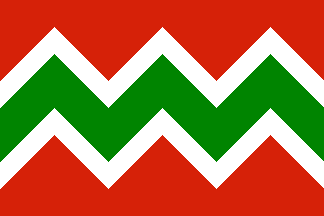
Flag
The flag features a series of green and white mountain peaks separated by red bands. The design symbolizes Jayuya's location in Puerto Rico's Central Mountain Range, while the colors honor both the municipality's natural beauty and its Taíno heritage.
Coat of Arms
The coat of arms incorporates indigenous symbolism, mountains, and agricultural elements representing Jayuya's history, coffee production, and role as Puerto Rico's Indigenous Capital. The mural crown signifies its status as an incorporated municipality.
Anthem
Jayuya's municipal anthem celebrates the beauty of the central mountains, the resilience of its people, and the enduring legacy of its Taíno ancestors.
The anthem of Jayuya was written by Miguel Requena Maldonado. The title is Ante nos se yergue....
Human & Capital Resources
Economy
Jayuya's economy remains closely tied to its mountain landscape and agricultural traditions. Coffee is the municipality's best-known crop, supported by the cool elevations, frequent rainfall, and fertile soils of Puerto Rico's central highlands. Local farms also produce tomatoes, plantains, root vegetables, fruits, and other crops, while livestock and small-scale food production continue to support rural communities.
Tourism has become increasingly important as visitors travel to Jayuya for its Taíno archaeological sites, coffee haciendas, museums, mountain forests, festivals, and scenic drives. Restaurants, lodging, artisans, tour operators, and small businesses benefit from this growing interest in cultural and nature-based travel. Wood carving and other traditional crafts also remain part of the local economy and help preserve the municipality's artistic heritage.
Municipal planning continues to focus on strengthening agriculture, tourism, commerce, education, and industry while improving infrastructure and creating employment opportunities. Even as Jayuya diversifies, coffee and the surrounding mountains remain central to its economic identity.
Education
Public education in Jayuya is administered by the Puerto Rico Department of Education through elementary, middle, secondary, and vocational programs serving communities across the municipality. Schools such as Adrián Torres Torres and Nemesio R. Canales provide education from the primary grades through middle school, while local students also have access to academic reinforcement and career-focused instruction.
Vocational education plays a particularly important role in Jayuya. Recent education data indicate that a substantial share of the municipality's high school students participate in vocational programs, helping prepare young residents for careers in agriculture, technology, healthcare, services, and skilled trades. Cultural institutions such as Museo El Cemí, Casa Museo Canales, Piedra Escrita, and the surrounding coffee-growing region also provide opportunities to learn about Puerto Rico's Taíno heritage, political history, archaeology, and traditional mountain life.
Students pursuing college degrees typically travel to institutions in nearby Utuado, Ponce, Arecibo, or Mayagüez. Jayuya's central location and mountain roads can make commuting more demanding than in coastal municipalities, but nearby universities and technical programs provide access to higher education in agriculture, engineering, business, education, healthcare, and the liberal arts.
Demographics *
Population
14,779
Land Area: 44.53 sq mi
Density: 319.7 per sq mi
Median Age: 40.4
Sex: 51% female
Economics **
$7,536
Median household income: $16,003
Puerto Rico: $21,058
Persons below poverty line: 57.9%
Housing, families and educational attainment *
Number of households
5,017
Housing units density:
146.9 (2013)
Persons per household: 2.83
High school grad or higher: 77.6%
Marital status: 41% married
* U.S. Census Bureau 2020 data, unless otherwise noted - Source: Quick Facts Puerto Rico.
** U.S. Census Bureau 2016-2020
Map References
Coordinates: 18.2186° N, 66.5917° W
ZIP Code: 664
Driving Distance from San Juan: 64.3 miles
Driving Time: 1 hour, 50 minutes
Frequently Asked Questions
Where is Jayuya located?
Jayuya is located high in Puerto Rico's Cordillera Central. It is bordered by Utuado and Ciales to the north, Ponce, Juana Díaz, and Orocovis to the south, Utuado to the west, and Ciales to the east.
What is Jayuya known for?
Jayuya is known for its Taíno heritage, mountain scenery, locally grown coffee, Piedra Escrita, Museo El Cemí, Casa Museo Canales, Cerro de Punta, and the Festival Nacional Indígena.
Is Jayuya worth visiting?
Yes. Jayuya is one of Puerto Rico's best destinations for travelers interested in Indigenous history, archaeology, coffee farms, mountain scenery, hiking, museums, and cooler temperatures.
What are the best things to do in Jayuya?
Top experiences include visiting Piedra Escrita, Museo El Cemí, Casa Museo Canales, Cerro de Punta, Toro Negro State Forest, Los Tres Picachos, local coffee haciendas, and the historic town center.
What is Piedra Escrita?
Piedra Escrita is a large boulder in the Río Saliente covered with dozens of Taíno petroglyphs believed to date from between A.D. 600 and 1200. A boardwalk leads visitors down to the river and archaeological site.
Is Cerro de Punta in Jayuya?
Yes. Cerro de Punta, Puerto Rico's highest peak, rises along Jayuya's mountainous southern boundary. The summit reaches approximately 4,390 feet above sea level and offers expansive views on clear days.
What is the weather like in Jayuya?
Because of its elevation, Jayuya is generally cooler than Puerto Rico's coastal municipalities. Days are warm and comfortable, evenings can feel noticeably cooler, and mountain showers help keep the surrounding forests and coffee farms green.
Do you need a car in Jayuya?
Yes. A car is strongly recommended because Jayuya's museums, archaeological sites, coffee farms, mountain peaks, restaurants, and scenic overlooks are spread across winding mountain roads.
How far is Jayuya from San Juan?
Jayuya is approximately two hours from San Juan, although travel time varies with traffic, weather, and mountain road conditions. The drive is winding but offers beautiful views through Puerto Rico's central highlands.
When is the Festival Nacional Indígena held?
The Festival Nacional Indígena is generally celebrated in November. It honors Puerto Rico's Taíno heritage through traditional music, artisan demonstrations, cultural presentations, food, and community activities.
Did You Know?
Puerto Rico has half the per capita income of America's poorest state, Mississippi.
Get Our Newsletter
Discover new places, local flavors, upcoming events, cultural stories, and some of our favorite finds from around the island.Read the Latest ¡La Isla! Newsletter
Follow Along


