
Islands, Islests and Cays of Puerto Rico
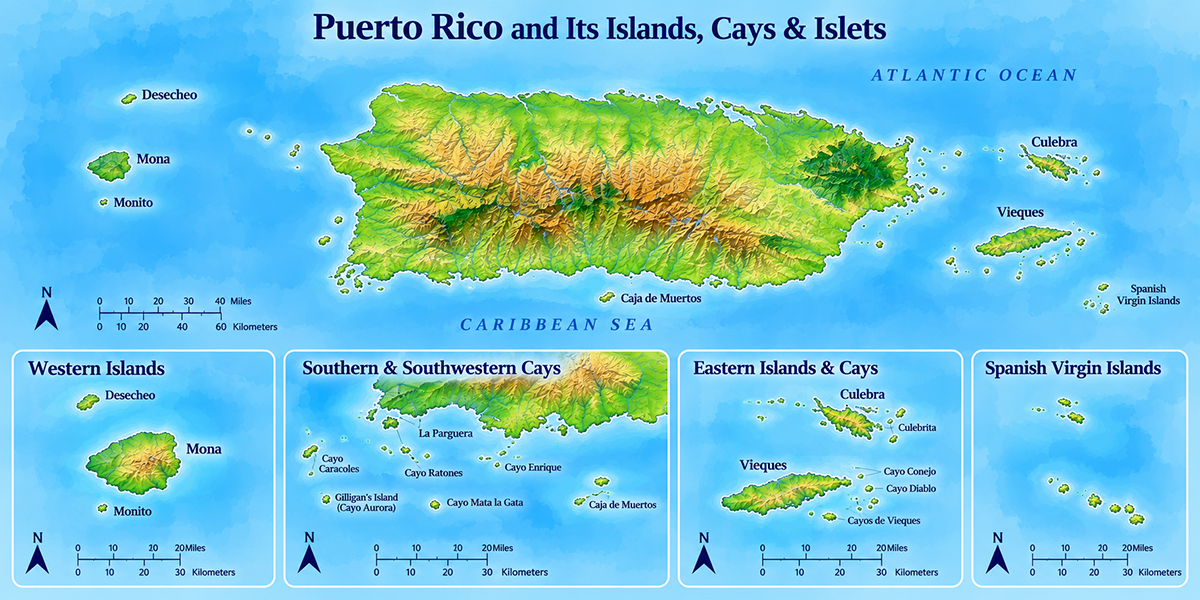
Puerto Rico is an archipelago formed by the main island and 140 small islands, islets and cays, including Vieques, Culebra, Culebrita, Palomino (known by some by the Spanish Virgin Islands), Mona, and Monito. Some are home to world-famous beaches and wildlife refuges, while others remain remote, uninhabited, and accessible only by private boat.
Puerto Rico's Islands at a Glance
These quick facts offer an overview of Puerto Rico's offshore islands, islets, and cays before you explore the complete list by municipality.
| Offshore islands, islets and cays | More than 140 |
|---|---|
| Largest offshore islands | Vieques and Culebra |
| Best known for snorkeling | Culebrita, Icacos and Palomino |
| Popular day trips | Icacos, Culebrita and Caja de Muertos |
| Reached by passenger ferry | Vieques and Culebra |
| Access to most smaller cays | Private boat, water taxi or guided excursion |
Explore Puerto Rico's Islands and Cays
From snorkeling excursions and quiet beaches to wildlife refuges and remote adventures, Puerto Rico's offshore islands offer experiences for many interests.
| If you want to... | Visit... |
|---|---|
| Relax on beautiful beaches | Culebra, Vieques or Culebrita |
| Snorkel in clear Caribbean waters | Icacos, Palomino or Culebrita |
| Discover marine life and wildlife | Culebra, Vieques or Mona Island |
| Take an easy boat excursion | Icacos, Palomino or Gilligan's Island |
| Combine hiking with coastal scenery | Caja de Muertos or Mona Island |
| Photograph dramatic landscapes | Mona Island, Culebrita or Caja de Muertos |
| Escape to a quieter destination | Vieques, Culebrita or Caja de Muertos |
Why Visit Puerto Rico's Islands and Cays?
Puerto Rico is more than one island. Its surrounding islands, islets, and cays reveal a remarkable variety of landscapes, from white-sand beaches and coral reefs to mangrove lagoons, limestone cliffs, and remote wildlife refuges.
Some destinations, including Vieques and Culebra, offer communities, accommodations, restaurants, and several days of exploration. Smaller cays such as Icacos and Palomino are ideal for boat excursions, snorkeling, swimming, and relaxing beside clear tropical waters.
Other islands offer a more adventurous experience. Caja de Muertos combines hiking, beaches, and coastal scenery, while Mona Island is known for its dramatic cliffs, caves, wildlife, and remote location. Together, these destinations show why Puerto Rico is best understood as an archipelago rather than simply a single island.
Reasons to explore
- Relax on beaches beyond the main island.
- Snorkel among coral reefs and tropical marine life.
- Discover protected wildlife habitats.
- Take scenic boat and sailing excursions.
- Explore hiking trails, cliffs, caves, and lighthouses.
- Experience the distinct character of Vieques and Culebra.
- Find quieter coastal landscapes away from busy resort areas.
My Favorite Island Experiences
What I love most about Puerto Rico's smaller islands and cays is how different each experience can feel. A short boat ride can take you from a busy coastal town to clear water, quiet beaches, and a landscape that feels completely removed from everyday life.
Vieques and Culebra each have their own identity and deserve more than a hurried visit. Their beaches, wildlife, and relaxed pace offer a very different experience from the main island. Smaller destinations such as Culebrita, Icacos, and Caja de Muertos provide memorable day trips where the journey across the water becomes part of the adventure.
Growing up in Puerto Rico, it was easy to think of the island as one place. Over time, I came to appreciate that Puerto Rico is truly an archipelago, with each island and cay adding another layer to its natural beauty and cultural story.
Puerto Rico's Major Islands
Beyond the main island, Puerto Rico's archipelago includes inhabited islands, remote wildlife refuges, and smaller cays scattered across the Atlantic Ocean, Caribbean Sea, and Mona Passage. From the beaches of Vieques and Culebra to the limestone cliffs of Mona and the historic lighthouse on Caja de Muertos, each island offers a glimpse into Puerto Rico's diverse geography, natural ecosystems, and maritime heritage.
The following table highlights some of Puerto Rico's most notable offshore islands and cays.
| Island | Location | What Makes It Notable |
|---|---|---|
| Vieques | East | Beaches, wildlife refuge, Mosquito Bay |
| Culebra | East | Flamenco Beach, coral reefs, snorkeling |
| Mona | West | Limestone cliffs, caves, endemic wildlife |
| Desecheo | West | Protected wildlife refuge |
| Caja de Muertos | South | Historic lighthouse, coastal ecosystems |
| Culebrita | East | Beaches, historic lighthouse |
| Icacos | East | Snorkeling and boating |
| Palomino | East | Beaches and recreational activities |
| Cayo Luis Peña | East | Protected coastal habitats and reefs |
Browse islands by: Region · Municipality
Explore Puerto Rico's Islands by Coastal Region
Spanish Virgin Islands
Vieques, Culebra, and surrounding caysExplore Puerto Rico's eastern island group, known for pristine beaches, coral reefs, protected wildlife habitats, and bioluminescent waters.
Explore the Spanish Virgin Islands
Eastern Coastal Islands
Icacos, Palomino, Palominito, and nearby caysDiscover the small islands off Puerto Rico's eastern coast, popular for snorkeling, boating, and day trips.
Explore Eastern Islands
Northern Coastal Islands
Atlantic-facing islands and caysExplore the small offshore formations along Puerto Rico's northern coastline, shaped by Atlantic waves and coastal geology.
Explore Northern Islands
Western Offshore Islands
Mona, Monito, and DesecheoLearn about remote islands in the Mona Passage, known for their ecological importance, limestone formations, and protected wildlife.
Explore Western Islands
Southern Coastal Islands
Caja de Muertos and southern caysExplore the islands and cays along Puerto Rico's Caribbean coast, where dry coastal landscapes meet mangroves and coral ecosystems.
Explore Southern Islands
Southwestern Cays
La Parguera and surrounding caysDiscover mangrove islands, shallow lagoons, and protected coastal habitats along Puerto Rico's southwestern coast.
Explore Southwestern Cays
Browse Islands, Islets and Cays by Municipality
Puerto Rico's smaller islands and cays are associated with municipalities throughout the archipelago. While some are accessible by ferry or guided excursions, others are protected nature reserves that require special access or permits. Explore the directory below to discover their names, locations, and geographic connections to the main island.
- Los Negritos
- Roca Cocinera
- Roca Resuello
- Tres Hermanas
- Tres Hermanos
- Isla San Juan
- Cayo Fanduca
- Isla de Ratones
- Roca Ola
- Roca Velasquez
- Penon Brusi
- Penon de Afuera
- Islote Numero Dos
- Arrecife Barriles
- Arrecife Hermanos
- Cabeza de Perro
- Cayo Cabritas
- Cayo Piñerito
- Isla Cabras
- Isla Pineros
- Las Lavanderas del Este
- Las Lavanderas del Oeste
- Piragua de Adentro
- Piragua de Afuera
- Alcarraza
- Cayo Ballena
- Cayo Botella
- Cayo de Luis Peña
- Cayo del Agua
- Cayo Lobito
- Cayo Lobo
- Cayo Matojo
- Cayo Norte
- Cayo Pirata
- Cayo Raton
- Cayo Sombrerito
- Cayo Tiburon
- Cayo Verde
- Cayo Yerba
- Cayos Geniqui
- El Ancon
- El Mono
- Isla Culebrita
- Las Hermanas
- Los Gemelos
- Pela
- Pelaita
- Piedra del Norte (part of Culebrita)
- Piedra Stevens
- Roca Culumna (part of Cayo Lobito)
- Roca Speck
- Cayo Tuna
- Roca Lavador (awash)
- Cayo Botijuela
- Cayo Ahogado
- Cayo Diablo
- Cayo Icacos
- Cayo Largo
- Cayo Lobos (private)
- Cayo Obispo
- Cayo Ratones
- Isla de Ramos (private)
- Isla Palominito
- Isla Palominos (private)
- La Blanquilla
- La Cordillera
- Las Cucarachas
- Los Farallones
- Cayo Don Luis
- Cayo Terremoto
- Cayos de Caña Gorda
- Gilligan's Island (Cayo Aurora & Cayo Caña Gorda)
- Cayo Honda
- Isla Ballena
- Cayo Caribes
- Mata Redonda
- Cayo Maria Langa
- Cayo Mata
- Cayo Batata
- Cayo Santiago (Monkey Island)
- Cayo Berbería - (5.5 km from Caja de Muertos)
- Cayo Bayo
- Cayo Caracoles
- Cayo Collado
- Cayo Corral
- Cayo Enrique
- Cayo Mata Seca
- Cayo Vieques
- Isla Cueva
- Isla Guayacan
- Isla Magueyes
- Isla Matei
- Isla La Cancora
- Islote de Juan Perez
- Punta Larga
- Punta Mosquitos
- Bajo Evelyn
- Cayo Algodones
- Cayos Caribe
- Cayo Palomas
- Cayo Parguera
- Cayo Rio
- Cayo Arenas
- Isla de Cardona
- Isla de Ratones
- Isla del Frio
- Isla Caja de Muertos
- Isla Morrillito
- Isla de Gatas
- Isla de Jueyes
- Cayo Mata
- Cayo Morrillo
- Cayo Puerca
- Cayos de Barca
- Cayos de Pajaros
- Cayos de Ratones
- Isla Guachinanga
- Isla Piedra
- Penon de San Jorge
- Cayo Alfenique
- Cayos Cabezazos
- Cayos de Caracoles
- Isla Puerca
- Isla de Cabras
- Isla de las Palomas
- Las Cabritas
- Isla de Cerro Gordo
- Isletas de Garzas
- Cayo Chiva
- Cayo de Tierra
- Pleasure island
- Cayo Jalova
- Cayo Jalovita
- Cayo Real
- Isla Chiva
- Isla Yallis
- Roca Alcatraz
- Roca Cucaracha
Local Tips
Confirm how to get there
Vieques and Culebra are served by passenger ferries and flights, while most smaller cays require a water taxi, private charter, or organized boat excursion.
Reserve transportation early
Ferry tickets, flights, and popular excursions can sell out, especially on weekends, holidays, and during the winter travel season.
Check marine conditions
Wind, waves, rain, and currents can affect ferry schedules and boat tours. Confirm conditions with the operator before leaving.
Ask what the excursion includes
Some tours provide snorkeling equipment, flotation devices, food, drinks, or beach chairs, while others provide transportation only.
Bring sun protection
Shade can be limited on small cays. Pack reef-conscious sunscreen, a hat, sunglasses, protective clothing, and plenty of water.
Carry out everything you bring
Many smaller islands do not have trash collection, restrooms, shops, or other visitor services. Help protect them by leaving no waste behind.
Respect protected areas
Some islands are wildlife refuges or nesting areas with restricted access. Follow signs, stay within approved areas, and never disturb nests or animals.
Do not touch coral or marine life
Avoid standing on coral reefs, collecting shells, feeding fish, or approaching sea turtles and other wildlife too closely.
Bring cash and essential supplies
Small operators and remote locations may not accept cards or offer food, water, medicine, or other necessities.
Plan for the return trip
Confirm your pickup location and departure time before exploring. Ferry passengers should return to the terminal early, particularly during busy travel periods.
Frequently Asked Questions About Puerto Rico's Islands and Cays
Explore answers to common questions about Puerto Rico's archipelago, including its offshore islands, smaller cays, natural reserves, and the Spanish Virgin Islands.
Is Puerto Rico an island or an archipelago?
Puerto Rico is both an island and an archipelago. While the main island is the largest and most populated, the archipelago also includes Vieques, Culebra, Mona, Desecheo, Caja de Muertos, and numerous smaller islands, islets, and cays scattered across the surrounding waters.
What are the main islands of Puerto Rico?
The three largest islands in the Puerto Rican archipelago are Puerto Rico, Vieques, and Mona. Culebra is another significant island and, together with Vieques, forms one of Puerto Rico's two offshore island municipalities. Other notable islands include Desecheo, Caja de Muertos, and Culebrita.
What are the Spanish Virgin Islands?
The Spanish Virgin Islands, also known as the Puerto Rican Virgin Islands, are a group of islands east of mainland Puerto Rico. They consist primarily of Vieques and Culebra, along with surrounding smaller islands and cays, including Culebrita and Cayo Luis Peña. Although geographically associated with the Virgin Islands, they are part of Puerto Rico.
What is the difference between an island, an islet, and a cay?
An island is a naturally formed area of land surrounded by water. An islet is a relatively small island, often rocky or uninhabited. A cay is typically a small, low-lying island formed from sand or coral material, often associated with reefs. Puerto Rico's coastline features all three types of landforms.
Which islands of Puerto Rico are inhabited?
Beyond the main island of Puerto Rico, Vieques and Culebra are the two inhabited island municipalities. They have established communities, local governments, and transportation connections to mainland Puerto Rico. Most of the smaller offshore islands and cays are uninhabited.
Can you visit Puerto Rico's offshore islands and cays?
Many offshore islands and cays can be visited by ferry, boat excursion, or private vessel. Vieques and Culebra have regular transportation connections, while destinations such as Icacos and Culebrita are commonly reached by boat. Other islands are protected natural areas with restricted access, and some are closed to the public. Always verify current access rules before planning a visit.
Which Puerto Rican islands are best for snorkeling?
Culebra, Culebrita, Icacos, and Cayo Luis Peña are among Puerto Rico's well-known snorkeling destinations. Their surrounding waters contain coral reefs, seagrass habitats, and diverse marine life. Conditions vary by season, weather, and sea conditions, so visitors should choose locations appropriate for their experience level.
Where is Mona Island, and can tourists visit it?
Mona Island lies in the Mona Passage, approximately 46 miles (74 kilometers) west of mainland Puerto Rico. Known for its limestone cliffs, caves, and unique wildlife, the island is a protected natural reserve. Visits are regulated and require authorization from Puerto Rico's Department of Natural and Environmental Resources.
Why are Puerto Rico's smaller islands and cays important?
Puerto Rico's smaller islands and cays support important coastal and marine ecosystems, including coral reefs, mangroves, seagrass beds, and seabird nesting habitats. Many also preserve archaeological sites, historic lighthouses, and evidence of Puerto Rico's maritime history. Protected areas help conserve these natural and cultural resources for future generations.
Continue Exploring Puerto Rico
North Coast
Explore Puerto Rico's North Coast, home to Atlantic beaches, dramatic karst landscapes, caves, and communities stretching west from San Juan.
East Coast
Discover Puerto Rico's East Coast, where El Yunque, Luquillo's beaches, Fajardo, and coastal nature reserves create endless opportunities for outdoor adventure.
Central Mountains
Journey into Puerto Rico's Central Mountains for coffee country, cooler temperatures, scenic roads, forests, and traditional mountain towns.
Metro Area
Experience Puerto Rico's Metro Area, home to San Juan, historic Old San Juan, beaches, museums, restaurants, nightlife, shopping, and the island's largest urban center.
West Coast
Head to Puerto Rico's West Coast for legendary surfing, beautiful sunsets, beaches, and lively coastal towns such as Rincón and Mayagüez.
South Coast
Explore Puerto Rico's South Coast for historic Ponce, Caribbean beaches, dry forests, coastal communities, and a slower pace.
Did You Know?
Puerto Rico has half the per capita income of America's poorest state, Mississippi.
Get Our Newsletter
Discover new places, local flavors, upcoming events, cultural stories, and some of our favorite finds from around the island.Read the Latest ¡La Isla! Newsletter
Follow Along


